BLOG
BLOGFitness to Dive, Aging, Exercise, and Your Heart
08 May 2026
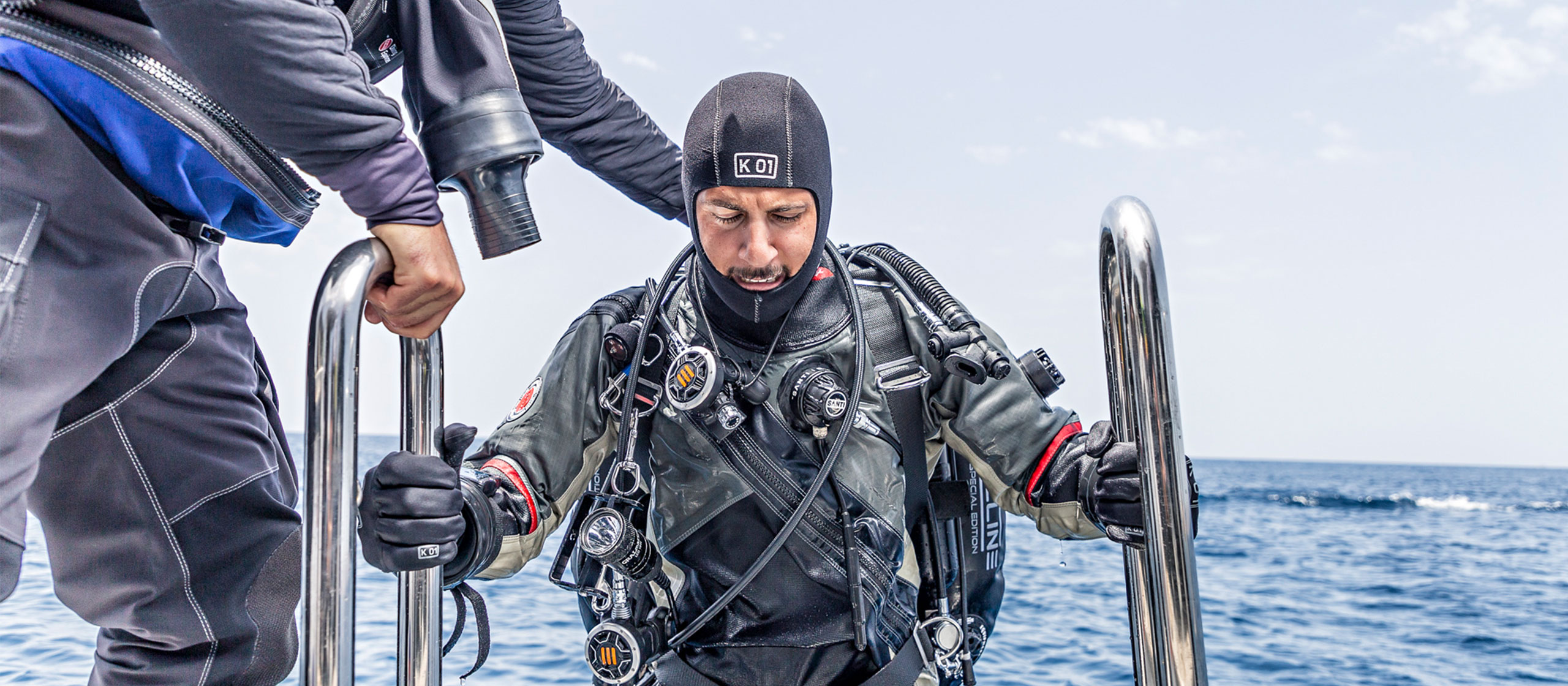
Let’s talk about what fitness to dive really means, how you can mitigate risk and improve your longevity as a diver.
Let’s break the most important news first: The single greatest danger to divers isn’t DCS. Nor is it barotrauma, an insta-buddy with terrible skills, or something large with sharp teeth. Instead, cardiac events account for as much as 25-30% of fatal dive accidents.
This is the consensus between DAN EU and US, as outlined by Prof. Costantino Balestra (EU) and Dr. Matias Nochetto (US) in a conversation hosted by the late, great Michael Menduno in spring last year.
Both DAN experts emphasize that taking care of your cardiovascular health is the single most important thing you can and should do to minimize your risk of a fatal accident. Once you’re in your mid-40s and older, you should have annual checkups with a qualified physician.
With this out of the way, let’s take a step back and examine what being fit to dive really means.
The word fitness is often used synonymously with the capacity for physical performance. A person able to lift 150 kg and run a marathon could be described as being ‘more fit’ than one who can lift only half the weight or run half the distance.
When it comes to recreational diving however, the difference between the above two individuals is unlikely to matter. We’re not comparing performance. Another meaning of fitness is suitability (as in fit for purpose), and this definition is the one we need to apply.
Assessing fitness to dive means taking a broad view of the individual – physical and mental health, both long and short-term (stress, travel, acute illness) – and apply a specific set of criteria. Fitness to dive is less about winning the competition, and more about meeting benchmarks. These are set out in the WRSTC’s medical statement and the attached guidelines for doctors.
Aging population of mixed physical condition is a good descriptor of the dive community as a whole. The average diver isn’t a role model when it comes to exercise and nutrition habits, and an increasing number of us are in an age range where chronic conditions start playing a role.
Broken down by location and preferred mode of diving, differences begin to emerge.
Divers in Asia tend to be younger than those in Europe and the Americas. As a group, freedivers are the youngest and physically fittest. Tech divers are less young on average – young people rarely have the disposable income to pay for things like helium and rebreathers – but tend to be somewhat conscious of their health.
Recreational scuba divers run the gamut from fresh young professionals who carry tanks all day, to office workers in their 40s who love to talk about how fit they were in high school, to Ralph, a 73 year-old chain smoker with a liver the size of a small planet.
All diving involves some combination of physical effort, exposure to heat and cold, as well as decompression stress. However, there is a fair amount of variation. A liveaboard trip or stay at a full-service resort, where boat crews handle equipment and all you need to do is backroll and enjoy, has different requirements than dives involving shore entries over rough terrain or long surface swims in choppy waters.
Besides being subject to longer exposures and increased decompression obligations, technical divers must be able to handle double tanks and deco cylinders without herniating discs all over the place. Freediving involves comparatively little equipment and generally flat sea conditions, but the nature of the activity itself is closest to what people who exercise might describe as exercise.
Location plays a role: A liveaboard trip in the tropics may offer easy diving in calm, clear, warm water. However, such locations tend to be a long way from professional medical services. Divers with health issues that could require medical attention on short notice should take this into account.
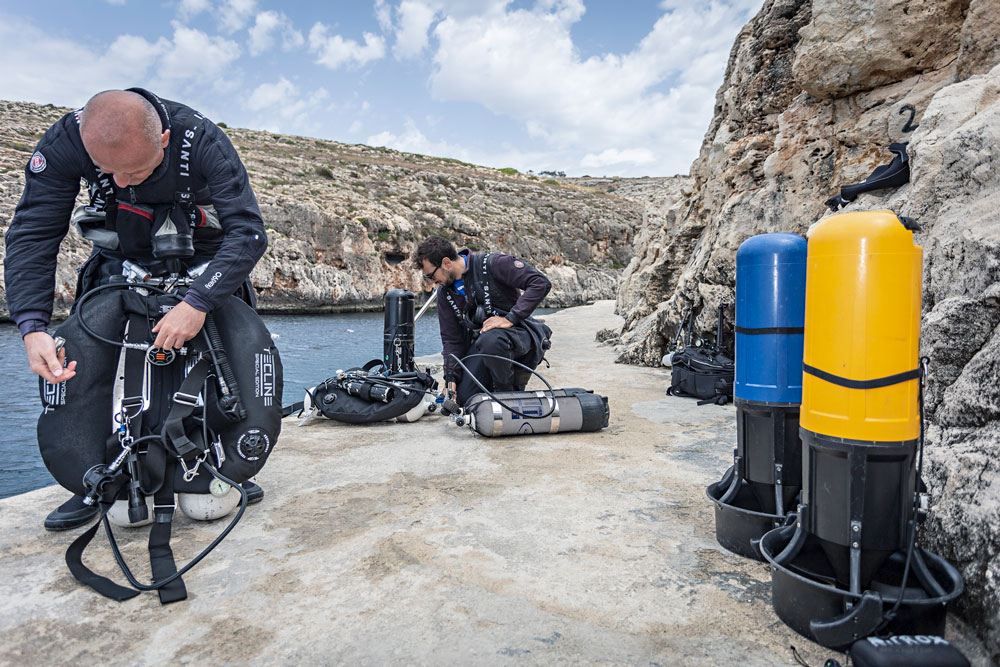
With this diversity in mind, DAN physicians have a few recommendations for the dive community at large. “When diving, we are facing cardiovascular challenges that are worth paying attention to. Cardiac events, not bubbles, are the greatest risk,” says Matias Nochetto. “Those of us over 45 years of age should get their heart checked regularly and take the results seriously.”
Besides winning the genetic lottery, good exercise habits go a long way towards maintaining cardiovascular health. Older divers who don’t exercise in the off season put themselves at increased risk when they suddenly pick up cylinders, jump into cold water, fight currents, and climb boat ladders after a long period of inactivity.
According to Balestra and Nochetto, dive experience and strong skills also reduce risk: Physical tasks become less strenuous with practice, and being familiar with a type of situation helps with staying calm and conserving energy. Conversely, older divers who are also beginners – or have gotten a bit rusty – face a greater risk and should be especially cautious.
Among outdoor activities, diving is distinguished by the irony that you want to be fit for it but don’t get fit from it. Quite the contrary; avoiding exertion is part and parcel of being a good diver. This raises the question of how best to prepare your body for situations where avoiding exertion isn’t an option.
When thinking of exercise, most people have activities like walking, swimming, jogging, or cycling in mind. This may be because the desire to lose weight is a common motivation to start exercising, and steady-state cardio exercise (as it is called) is a popular approach for accomplishing this goal.
However, unless someone is facing obesity-related health risks, losing weight doesn’t per se improve physical fitness of the kind we want for diving. Skinny and healthy aren’t the same thing.
In situations where diving requires physical effort, it is typically for short periods of time and involves moving more or less heavy objects – picking up scuba gear, climbing a ladder with your tanks on while the boat is rocking up and down in the waves, or (may it never happen to you) transporting the victim of an accident.
Performing such tasks confidently and without fear of injury takes some amount of strength, and you won’t get that from walking on a treadmill.
The primary method for getting stronger is resistance training. Classic compound barbell lifts (squat, deadlift, bench and overhead press, etc.) stand out in particular as a proven method for building general-purpose, whole-body strength. While requiring some guidance to be performed safely, these basic movements are among the easiest to learn, most effective, and most functional (in the sense of everyday utility) full-body exercises out there. Unlike gym machine workouts, they also teach good posture and balance under load.
In a number of studies, strength training has been shown to be equal to cardio when it comes to keeping your heart healthy. Greater muscle mass also means a higher base metabolic rate, which helps with losing fat (though not necessarily weight; muscle is dense). Finally, resistance training is important for maintaining bone density which, along with strong muscles to support your spine and joints, helps with injury prevention. All of these factors become more important with age.
At the end of the day though, the best exercise is the one you feel motivated to keep doing. If Pilates is your thing, go for it. As long as your training combines some form of working against resistance with some form of putting yourself out of breath, you’re probably doing okay. If unsure whether a certain type of exercise is right for you due to injury or a pre-existing medical condition, it is advisable to consult with a doctor first.
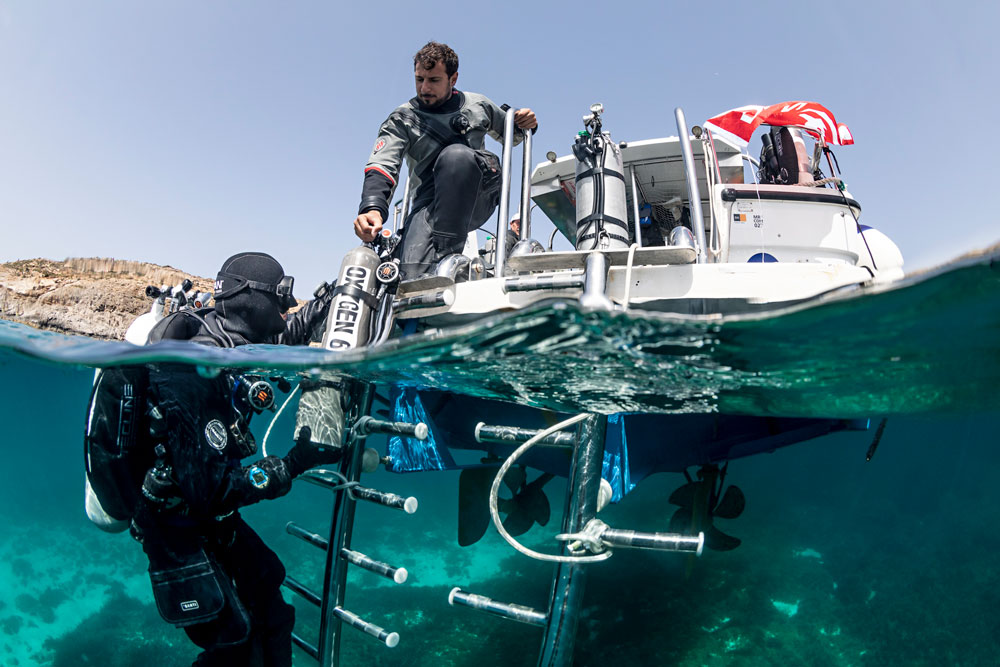
“Learn to listen to your body. Don’t push yourself, and don’t tell your inner voice to shut up when it tries to warn you, Accept who you are, and acknowledge your limitations,” says Tino Balestra in his closing remarks. “If you want to challenge yourself, you need to prepare first. Don’t just put yourself in a situation thinking you’ll come out all right.”
Fitness to dive isn’t a simple yes-or-no issue. Besides looking at the diver and their long and short-term physical and mental condition, it is also important to consider the dive and its circumstances. The flip side of “Am I fit to dive?” is another question: “Is this dive suitable for me?”
With that in mind: Train hard, dive easy, and stay safe!
This article is partially based on an interview of Prof. Costantino Balestra (DAN EU, Haute École Bruxelles-Brabant) and Dr. Matias Nochetto (DAN US) conducted by Michael Menduno in the spring of 2025. The full conversation can be viewed here: Diving’s Biggest Hidden Danger Revealed by Experts!
About the experts
Matias Nochetto, M.D., is the Vice President of Medical Services at DAN, where he has worked since 2006. He is co-director of the DAN-UHMS continuing medical education program and a faculty member of several national and international diving medicine courses and programs. He became a dive instructor (1999) during medical school, which led him to complete a three-year clinical and research fellowship in hyperbaric and diving medicine to combine the two passions.
Costantino Balestra, Ph.D., is Vice President of Research and Education at DAN Europe, and past President of the European Underwater and Baromedical Society (EUBS). He directs the Environmental, Aging and Occupational Physiology Lab at Haute Ecole Paul-Henri Spaak in Brussels, Belgium. His primary research interests are in the physiology of extreme environments and sports science.
About the author

Dive into the latest stories,
before anyone else.
Subscribe to the
Alert Diver
newsletter.