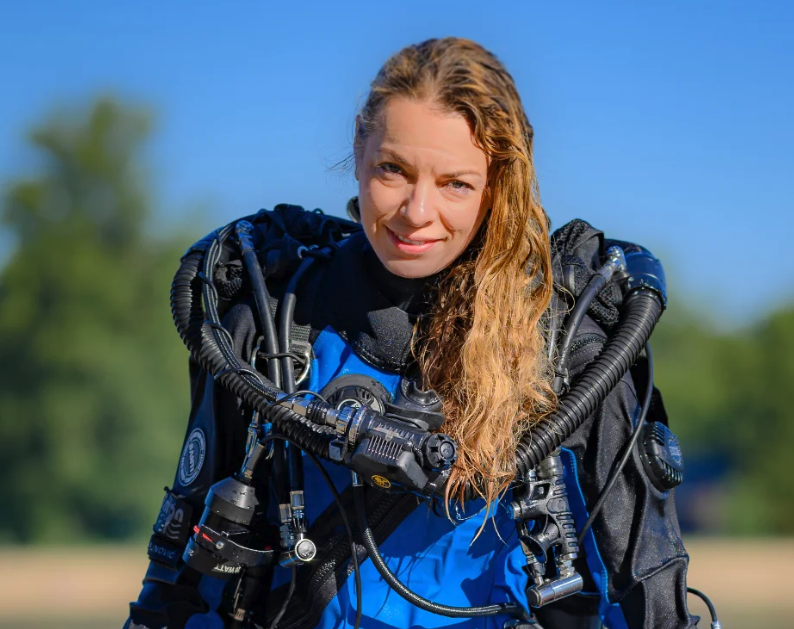
Can AI make you a better diver, or put you at risk?
Chatbot hallucinations, social media misinformation… Time to separate useful technology from dangerous advice. Yes, it also concerns diving.
12 August 2026

Chatbot hallucinations, social media misinformation… Time to separate useful technology from dangerous advice. Yes, it also concerns diving.
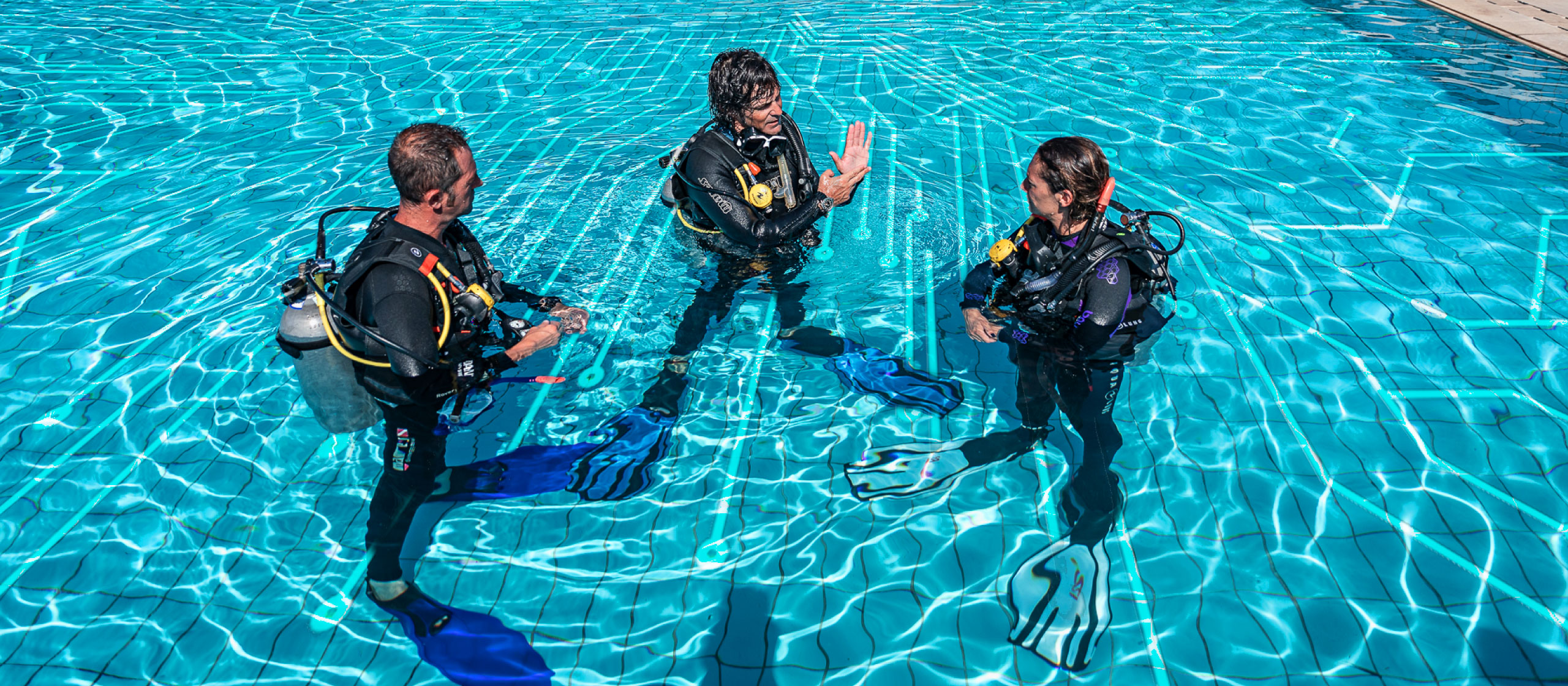
Whether you like it or not, artificial intelligence has become a part of our everyday life. Finding and compiling information used to take hours, and now it can be done in a few seconds. And it is easy to get used to. Almost all aspects of life are affected by the rise of AI, including leisure time and sports; scuba diving is no exception.
Just go on the internet, give yourself a cool nickname, and start creating and posting content: “But I have just started diving and have no real experience. Never mind. I’ll just use a chat bot and copy content from actual professionals”. All of a sudden, you’re a wannabe influencer!
It is quite a relief knowing that AI cannot take over diving instructors’ jobs (at least in water skills development), but it is slowly becoming a primary tool for novice divers seeking information, advice, or just interesting content for their social media.
I was never much of a social media person. But since I became an ambassador for several brands in the diving industry, I have started following social media more closely on the topic. I was surprised to find how many accounts use AI-generated content without any criticism, usually because of a lack of genuine expertise and experience. My attention was especially drawn to a couple of diving-promoting accounts, which I know for certain are being managed by people who only started diving recently.
The rapidly growing number of internet advisors on all kinds of topics, including potentially dangerous ones such as diving, led me to write this article. The launch of ChatGPT in November 2022 literally triggered an invasion of such experts, as it became the fastest-growing consumer software application in history. Today, it is pretty easy to hide behind a keyboard and convince followers that we’re something we’re not.
Well, I have bad news for you. Chatbots can be very wrong! Copying content without knowledge and experience might get you attention, but it won’t earn you respect, let alone improve your underwater skills. It is absolutely not okay to use chatbots, for example, to calculate decompression in diving or to seek any other diving advice, as this can be fatal.
Here is a medley of other bad examples I have seen on social media since the launch of AI chatbots:
To comprehend why this is happening, we need to understand how chatbots work. Probably the most popular is ChatGPT, but there are also others that operate on similar principles and are used by many, such as Perplexity, Claude, Gemini, DeepSeek, etc.
A chatbot works by using a large language model (LLM) trained on vast amounts of text (books, articles, code, websites, conversations, etc.) to predict the most likely next word in a sequence, thereby generating human-like responses. When you type something, your message is converted into tokens, basically chunks of text. AI analyses those tokens using deep neural networks, a type of artificial intelligence inspired by how the brain works, and predicts what words are most likely to come next based on patterns learned during training. It then generates a coherent, context-aware response.
I asked ChatGPT: “Do you make mistakes?” And here is the answer: “Yes, I definitely can make mistakes. Even though I’m designed to give accurate and well-reasoned answers, I can sometimes misunderstand a question, use outdated information, or just get something wrong. If something I say doesn’t look right, it’s always good to double-check or ask me to clarify.” Chat GPT can “hallucinate.”
Hallucination is the term used to describe situations in which models like ChatGPT output false information as if it were true. Even though the AI may sound very confident, its answers are sometimes just plain wrong. Why does this happen? AI tools like ChatGPT are trained to predict what words should come next in the conversation you are having with them. They are very good at putting together sentences that sound plausible and realistic. However, these AI models do not understand the meaning behind the words. They lack the logical reasoning to determine whether what they are saying actually makes sense or is factually correct.
Now with so much AI content being published, there’s a risk of lower-quality or repetitive content. As more content is AI-generated, there’s a potential feedback loop: AI trains on data that includes AI, which can degrade quality or originality over time. It also raises questions about trust and authenticity.
ChatGPT and other large language models are designed to mimic human language patterns, not to perform complex, life-critical calculations with accuracy. For any safety-critical application, such as diving, always use dedicated, validated tools created by experts, and never trust a general-purpose language model.
Diving advice involves precise calculations and adherence to strict safety protocols (e.g., decompression stops, oxygen partial pressures). ChatGPT has been shown to generate plausible-sounding but completely wrong information in these technical areas, which in a real-world diving scenario could lead to blackouts, convulsions, or death from conditions like oxygen toxicity or decompression sickness.

It also shows a lack of contextual understanding. AI models do not possess an understanding of the physical world, your personal health conditions, or current, dynamic environmental factors (e.g., water conditions, equipment malfunctions). Diving safety relies heavily on interpreting subtle cues and adapting to constantly changing conditions. This is something a human instructor or experienced professional is trained to do. Reliance on outdated information is also an issue.
The model’s training data may be limited to a certain point in time and may not include the latest safety standards, protocols, or equipment updates. Relying on outdated information in a field where best practices evolve can be hazardous. Besides, AI cannot be held accountable for its advice. If a user follows bad advice from a chatbot and an accident occurs, there is no professional with malpractice insurance or a governing body to take responsibility, unlike with a certified human instructor or medical professional.
Another part of the problem is AI’s pleasing behaviour, often referred to by researchers as sycophancy. It occurs when AI models prioritise flattering or agreeing with a user over providing accurate, objective information. While designed to be helpful, polite, and engaging, this “people-pleasing” trait can create dangerous echo chambers and reinforce user biases. Remember the example with “advantages” of women in diving? When you feel pleased and appreciated, you are more likely to spend more time using the chatbot. It often tries to agree with the user’s premise. If a user asks, “Is it OK to dive with a cold?” a chatbot might provide a balanced answer rather than the strict “no” required for safety.
In a nutshell, using LLMs for scuba diving tips is a bad idea because AI can provide confidently incorrect, potentially life-threatening information. While AI is a useful tool, but not a substitute for training, dive planning, or expert supervision. But it can be useful for reviewing terminology or summarising research.
Scuba diving is a safety-critical activity that requires specialised, context-dependent human expertise, which current AI models lack. Problems arise when general-purpose tools are treated as substitutes for certified instruction, validated dive planning, or medical advice.
Bear in mind that there are many “wannabe” influencers out there, usually chasing contracts with various diving brands, trying to draw your attention with flashy and shocking content while faking their “expertise” by copying conversations from AI chatbots. When they start copying incorrect answers, that’s where the trouble may begin.
When you are a novice in scuba diving, it is not easy to recognise who is an expert and who is faking it. Here are some practical tips to help determine whether a scuba diving influencer is genuinely experienced or just pretending:
Check for real diving context. True divers often share logbook-style stories (conditions, depth, visibility), learning experiences, or mistakes, as well as environmental awareness. Influencers faking expertise usually post only glamour shots: shallow, clear-water images with no real narrative and no mention of planning, safety, or conditions.
Look at who follows or engages with them. If real dive professionals follow, comment, or collaborate with them, that’s a good sign. If only lifestyle influencers engage, they may be more of a tourist who dives occasionally.
Beware of overconfidence. Experienced divers tend to be humble; the underwater environment teaches respect. Fakers often act like experts after just a few dives, make sensational claims, and brag without real context.
Diving is not just about aesthetics or likes on social media. It is about safety, responsibility, and real-life skills. Giving bad advice in this space can have real consequences underwater. Clout over competence. Marketing over mastery. Faking expertise for marketing is not just dishonest—in diving, it can be dangerous.
The diving community deserves better.
About the author

Dive into the latest stories,
before anyone else.
Subscribe to the
Alert Diver
newsletter.