
Analog Sharks: Where Art Meets the Ocean
A slow dive into the fragile life beneath Portugal’s blue frontier.
27 November 2025

A slow dive into the fragile life beneath Portugal’s blue frontier.
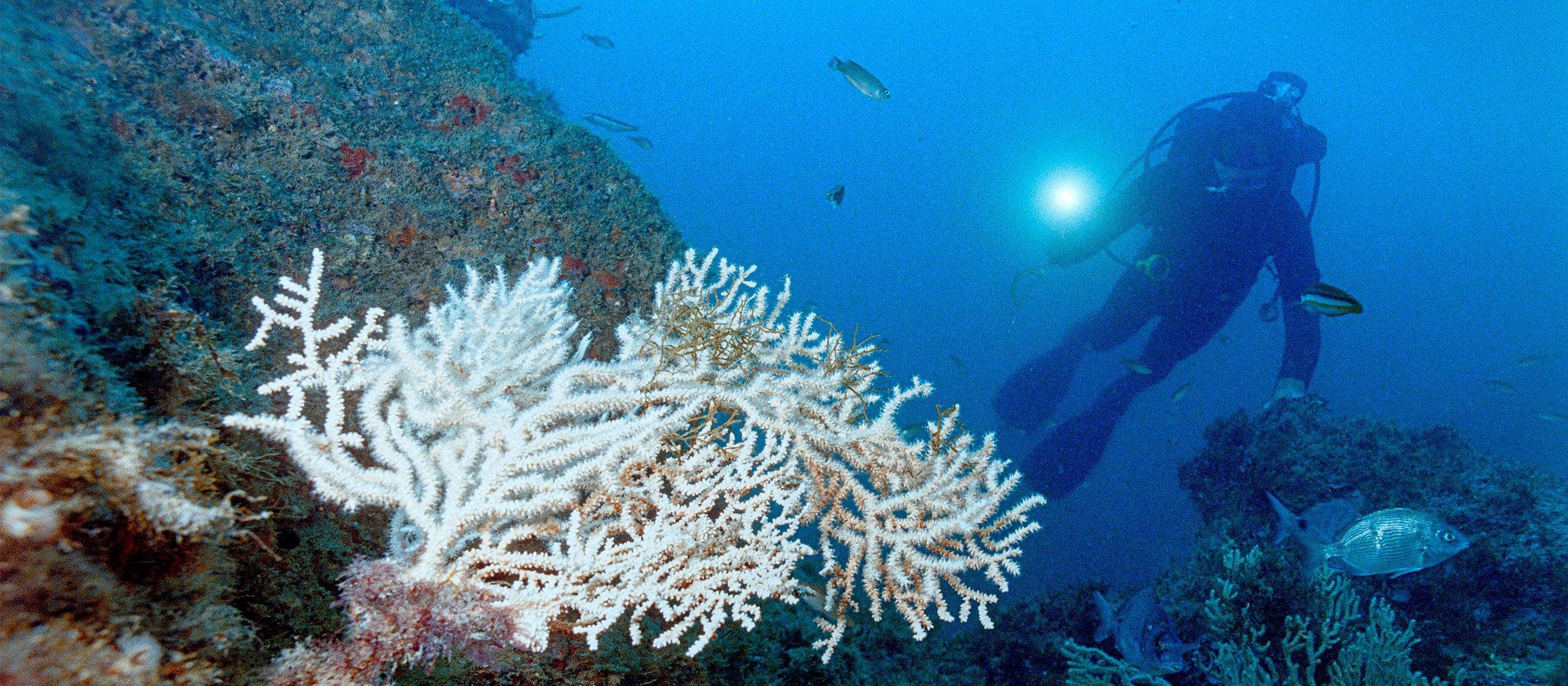
The sea has always been there, a restless mirror around Portugal, whispering stories of light and shadow. It shapes cliffs and tempers the wind, but beneath its surface lies a world less known, less seen, and far more fragile. In these waters, where the Atlantic breathes against the continental shelf, sharks and rays move like ghosts of another age, ancient, deliberate, resilient. They have been here long before the first sails crossed the horizon, and yet, in the silent language of the tides, they are vanishing.
The project Analog Sharks begins in that silence, a convergence of art and science, an attempt to listen the Ocean. It seeks not just to record the life of sharks and rays, but to feel it: through the slow alchemy of film, through light pressed into silver, through hands stained with developer and salt.

Out at sea, light breaks differently. It fractures and bends, rippling across the backs of waves and then dissolving into the blue. Down there, the world slows. Rays drift over the sand like fallen moons. The shadows of sharks cross the reefs in quiet rhythm.
It is here, in this blue expanse, that Vasco Coelho descends with an old camera sealed inside a metal casing. The weight of the gear is familiar, the rhythm of breath steady. The sound of the regulator fades into the pulse of the sea. Ahead, the lens becomes the only eye, a thin glass barrier between the human world and the big blue.
In Portugal’s Atlantic waters, these encounters are not rare, merely unseen. Along the jagged coastlines of Sesimbra and Cascais, among the submerged ridges of the Algarve, and in the open reaches of the Azores and Madeira, life moves in ways that defy human rhythm. Small catsharks curl into the sand. The blue shark drifts with the currents. In deeper canyons, the six-gill shark, a relic of prehistory, passes through the dim corridors of the abyss.
And where the seabed stretches into soft plains, rays lie half-buried, thornbacks, eagle rays, electric rays, their forms hidden but alive, breathing through the sand.
These are not monsters, nor myths. They are neighbours of the Portuguese sea, keepers of its balance, indicators of its health. To photograph them is not only to capture beauty but to confront vulnerability, to trace the line between what endures and what fades.

In an era when every image can be captured in an instant, this project chooses slowness. Film is a patient medium, demands attention, ritual, imperfection.
Underwater, time stretches, the photographer must wait for the creature to pass, for the water to settle. The camera hums quietly, the film turns, the moment is caught. But the result will not be known for days, sometimes weeks, until the negatives dry in the darkroom, until the shapes emerge from the paper in soft silver or color tones.
Back on land, the work continues under the red glow of a safelight, the smell of developer and fixer fills the air, sharp, chemical, strangely comforting. The film is washed, hung, dried, then comes the contact sheet: rows of small, uncertain ghosts waiting to be revealed.
Sometimes the prints are made in deep black and white, where the sea becomes texture and memory, sometimes they are coloured, toned by hand, brushed with hues that mimic the ocean’s moods. Occasionally, a cyanotype is chosen, the old blueprint process turning the image a deep, timeless blue. These are not just aesthetic choices, they are metaphors, the analogue process mirrors the ocean’s own rhythms, patient, layered, unpredictable, alive.
Through this slow craftsmanship, the project transforms photography, it allows science to speak in the language of emotion and art to carry the weight of fact.

Every image is a record, but also a question. What does it mean to document a world in danger of disappearing?
Sharks and rays are not only subjects, they are symbols of ecological balance. Their lives unfold over decades, their reproduction is slow, their survival uncertain. In Portuguese waters, many species are threatened, caught as bycatch, entangled in nets, or pressed against the limits of warming seas. Rays, especially, suffer invisibly: often landed under generic names, their diversity flattened into anonymity.
The camera, here, becomes a tool of recognition. To look closely is to give identity back, to say: this one lives here, this one matters. A photograph of a skate resting on sand, its spiracles pulsing gently, carries more than form, it carries a story of a species, a habitat, an ecosystem bound together by invisible threads.
By focusing equally on sharks and rays, the project expands the narrative of conservation. Sharks embody the wild, the powerful, rays evoke grace, subtlety, stillness. Together they form a visual and ecological continuum, from the deep pelagic corridors to the sunlit coastal shallows.
Portugal’s marine world is a living laboratory, layered in contrasts. In the Azores, volcanic slopes plunge into the abyss, in Madeira, clear waters shimmer with pelagic wanderers. The Algarve’s sandy coves hide resting rays, the rugged cliffs of the Arrábida cradle kelp forests and coral gardens. Each region offers its own rhythm, its own palette of life.
Through the analogue lens, each location becomes more than geography, it becomes character. The sea has moods: it broods, it brightens, it remembers, the goal of Analog Sharks is not just to map these places, but to translate them into feeling, into understanding, into care.

Photographs alone do not save species, the project extends beyond the darkroom into classrooms, galleries, and coastal communities.
Large-format exhibitions will travel through museums and maritime centres, inviting visitors to stand face-to-face with the ocean’s inhabitants. The prints will be accompanied by maps, species notes, and narratives that bridge the gap between scientific fact and human emotion.
Workshops will follow, where students and local residents learn not only about sharks and rays, but about the process itself.
A book will gather these stories, essays, images, reflections, a tactile object meant to last, to be held, to be passed on. An online platform will mirror it in the digital realm, linking art to data, image to context, Portugal to the wider ocean world.
Through these layers, exhibition, education, publication, the project becomes a conversation: between artist and scientist, teacher and student, diver and fisherman, viewer and sea.
In the end, the title speaks for itself: Analog Sharks.
Film holds time physically, light trapped in emulsion, moments fixed in silver. The ocean holds time too, in the slow growth of coral, in the migration of a shark that returns after years, in the millennia carved into the seabed. Both are fragile archives, both require care.
To photograph sharks and rays with film is to accept imperfection, motion blur, grain, unpredictability, but within those imperfections lies truth. The ocean is not static, it moves, breathes, resists clarity, the analogue process honours that, It allows the image to remain alive, to carry mystery.

Imagine this: a diver drifts at fifteen metres, near the edge of a canyon, light fades to blue-grey. Below, a ray glides across the sand, stirring tiny clouds that shimmer like dust in sunlight, the diver raises the camera, a click, a flash of bubbles, and the moment is gone, but on the film, something remains.
Weeks later, under the red glow of the darkroom, that same moment reappears, grainy, imperfect, luminous, the contours of the ray, the texture of the sand, the weight of the water. What was once fleeting becomes visible again, preserved in light and grain.
That is the heart of the project: not merely to show, but to remember, to remind us that beauty can still be found in what endures, and responsibility in what fades.
The Portuguese sea is not empty. It breathes with ancient life, with sharks and rays that glide through its depths as they have for millennia, and if we learn to see, truly see, through the lens of time, perhaps we might learn, too, how to protect what remains.
About the author

Dive into the latest stories,
before anyone else.
Subscribe to the
Alert Diver
newsletter.