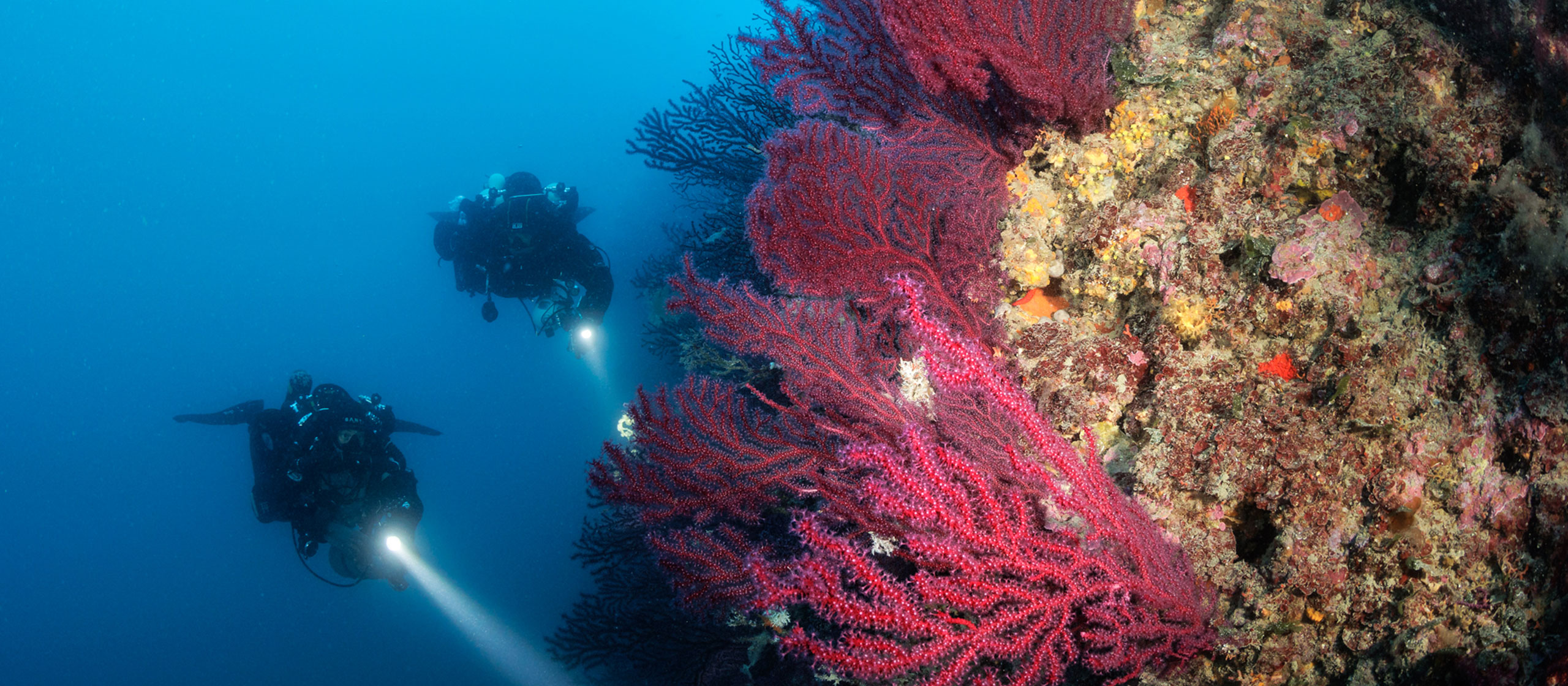
Research has changed many of the ways divers prepare for and recover from dives. Hydration is an example: once passed around as friendly advice, it’s now understood that dehydration is a risk factor for DCS and should be avoided. Most questions connected to nutrition and diving aren’t settled: there are individual studies, interesting leads, work in progress. Dark chocolate is one of them. Some at the DAN Research team looked into the matter a few years ago, and the findings are still worth revisiting.
Bubbles
Every dive, even a simple one within no-deco limits, produces bubbles: inert gas comes out of solution as pressure drops, forming venous gas emboli which the body normally filters out with no symptoms. However, research increasingly links bubble formation to a stress response in the endothelium, the thin cell layer lining every blood vessel and regulating vascular tone through nitric oxide (NO) production. After a dive, endothelial performance often dips temporarily, a state called endothelial dysfunction. It’s not something you’d feel, and it typically resolves on its own. But it’s a measurable sign that diving places a physiological demand on the body.
Enter the cocoa bean
Back in 2015, a Belgian team led by Sigrid Theunissen and Costantino Balestra (VP DAN Europe Research) posed themselves an original question: could the antioxidants in dark chocolate mitigate the post-dive endothelial stress? Cocoa is rich in flavanols, plant compounds well known to support blood flow and nitric oxide signalling.
In the study, 42 male divers were split into two groups: one dived without intervention, the other ate 30 grams of dark chocolate about 90 minutes beforehand. Before and after each dive, the team measured flow-mediated dilation (FMD), the standard marker of endothelial health, along with circulating nitric oxide and peroxynitrite, a byproduct of oxidative stress.
The control group showed the expected pattern: FMD dropped after the dive, alongside a fall in protective compounds. The chocolate group told a different story: FMD increased, nitric oxide rose, and the oxidative stress markers that climbed in the control group stayed flat.
A companion study from much of the same team found a similar effect in breath-hold divers doing repeated cold-water dives: same dose, same timing, same protective result. The researchers’ conclusion: dark chocolate before diving appears to reduce the endothelial dysfunction usually seen afterward, most likely because its antioxidants help neutralise the free radicals diving generates.
Read the full study here.
Keeping the claim honest
It’s worth clarifying that the study measured endothelial function, not DCS, and wasn’t designed to test if chocolate reduces DCS risk directly. Dark chocolate is not a substitute for conservative profiles, safety stops, or good judgment. What the study does suggest, though, is that simple dietary choices appear to give the vascular system a measurable assist with one of diving’s physiological demands.
From the lab to the dive site: Scubachocolate
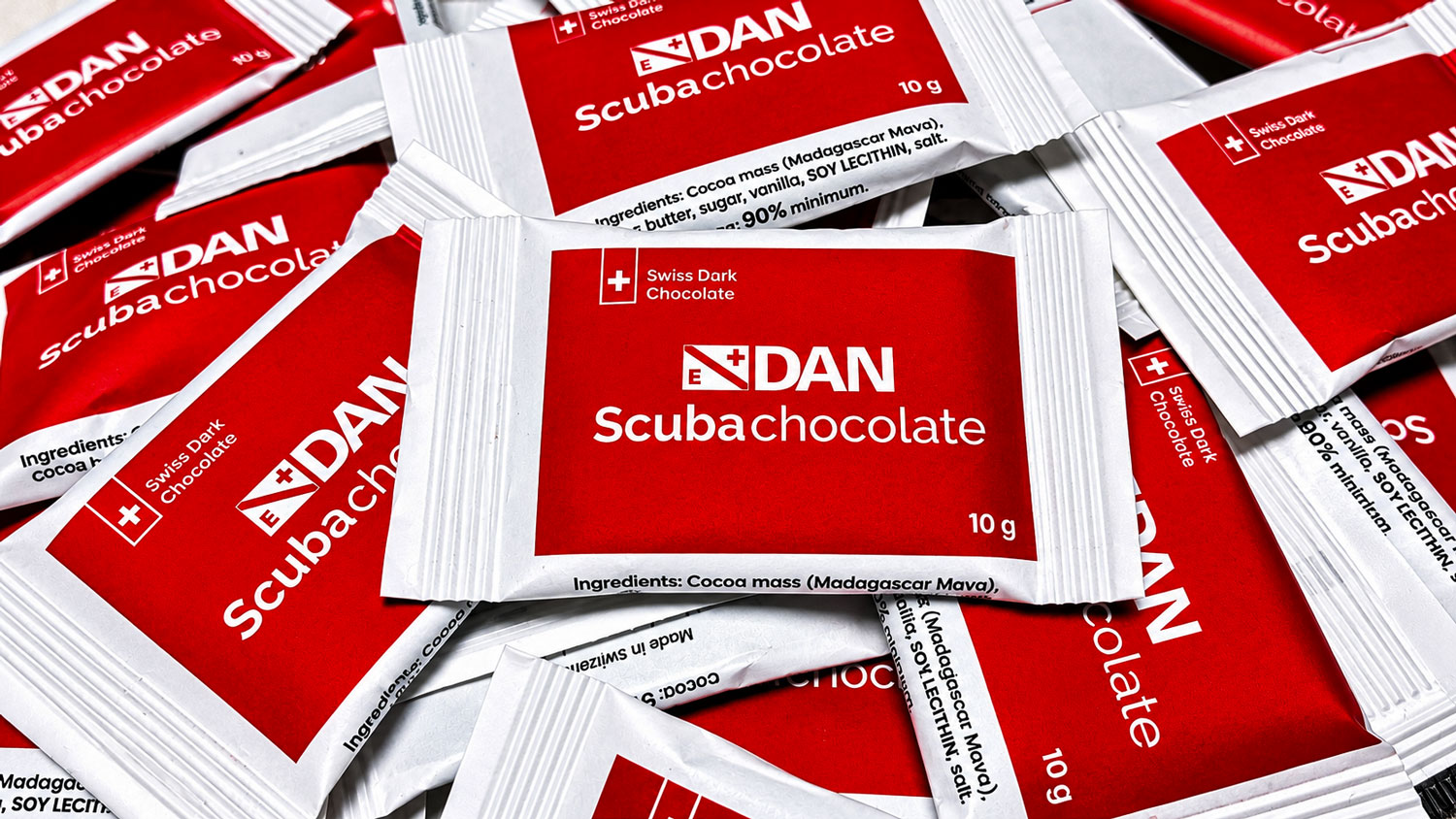
We re-read the study and put it to work. That’s the thinking behind Scubachocolate, produced in partnership with a Swiss chocolate maker: 10-gram bars at 90% cocoa, a practical, grab-and-go nod to the protocol used in the original study. An easy habit to fold into the pre-dive routine, alongside pre-dive checks and briefings.
Starting this season, DAN Europe members will find the mini Scubachocolate bars at selected dive shows, conferences, and events across Europe.
It won’t replace your surface interval sandwich. But next time someone jokes about eating chocolate before a dive, you’ll have the paper to back you up.
References
- Theunissen S, Balestra C, Boutros A, De Bels D, Guerrero F, Germonpré P. The effect of pre-dive ingestion of dark chocolate on endothelial function after a scuba dive. Diving Hyperb Med. 2015 Mar;45(1):4-9. PMID: 25964032.
- Theunissen S, Schumacker J, Guerrero F, et al. Dark chocolate reduces endothelial dysfunction after successive breath-hold dives in cool water. Eur J Appl Physiol. 2013.
- Wekre SL, Landsverk HD, Lautridou J, Hjelde A, Imbert JP, Balestra C & Eftedal I. (2022). Hydration status during commercial saturation diving measured by bioimpedance and urine specific gravity. Front Physiol 13, 971757.
- Gempp E, Blatteau JE, Pontier JM, Balestra C & Louge P. (2009). Preventive effect of pre-dive hydration on bubble formation in divers. British journal of sports medicine 43, 224–228.

 BLOG