BLOG
BLOGThe value of biodiversity flows through the Strait of Messina
A new documentary chronicles this extraordinary stretch of coastline, navigating extreme currents, unexplored depths, and fragile beauty.
28 January 2026
A new documentary chronicles this extraordinary stretch of coastline, navigating extreme currents, unexplored depths, and fragile beauty.
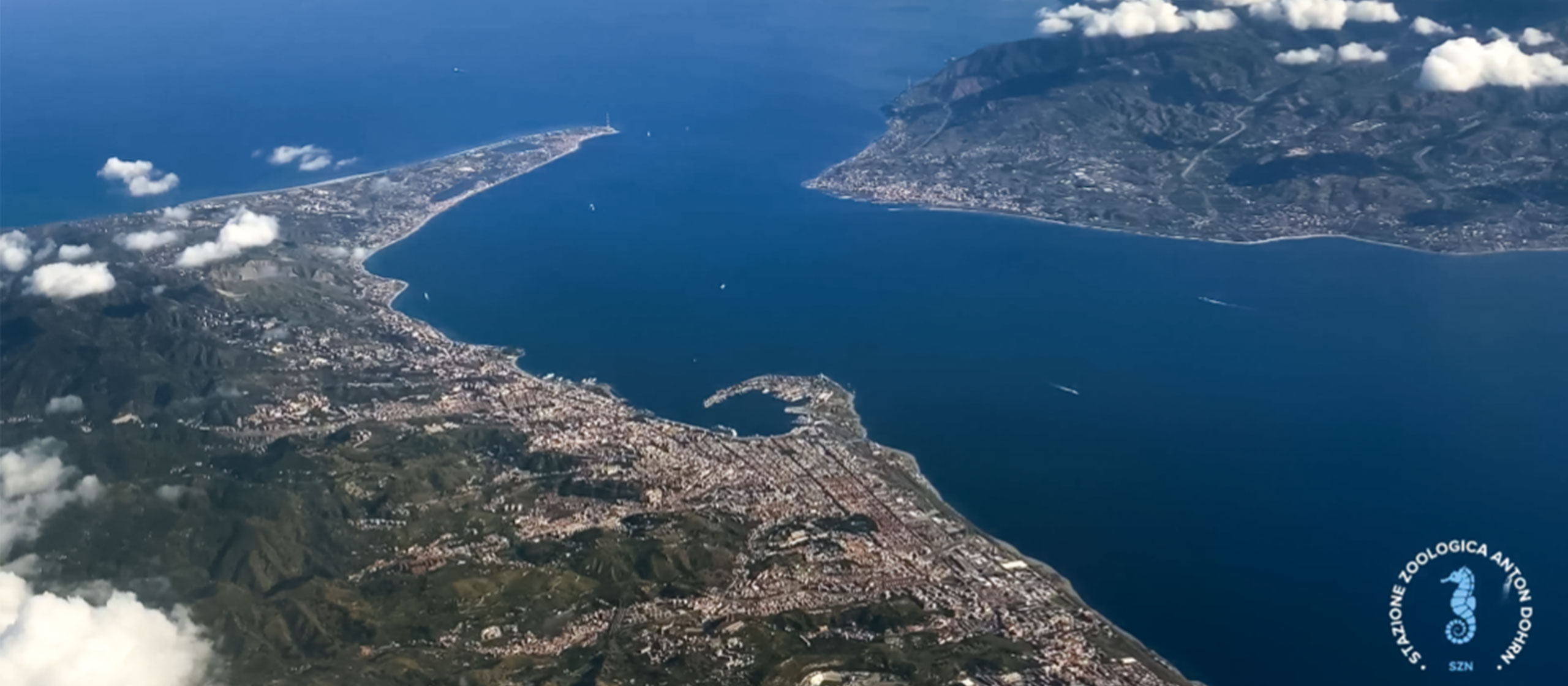
The Strait of Messina is more than just the strip of sea separating Sicily from the mainland; it is a beating heart of biodiversity, a unique natural laboratory, where legendary currents guard unique and extraordinary life forms.
Despite its proximity to the coast, much of its seabed remains unexplored, a sanctuary for beauty that remained hidden for millennia.
It is within this setting that an unprecedented project was born, as documented in the film by renowned diver and director Roberto Rinaldi, and produced by GG Productions: “The value of biodiversity flows through the Strait of Messina”.
The documentary directed by Roberto Rinaldi for the National Biodiversity Future Centre (NBFC) – Spoke 2.
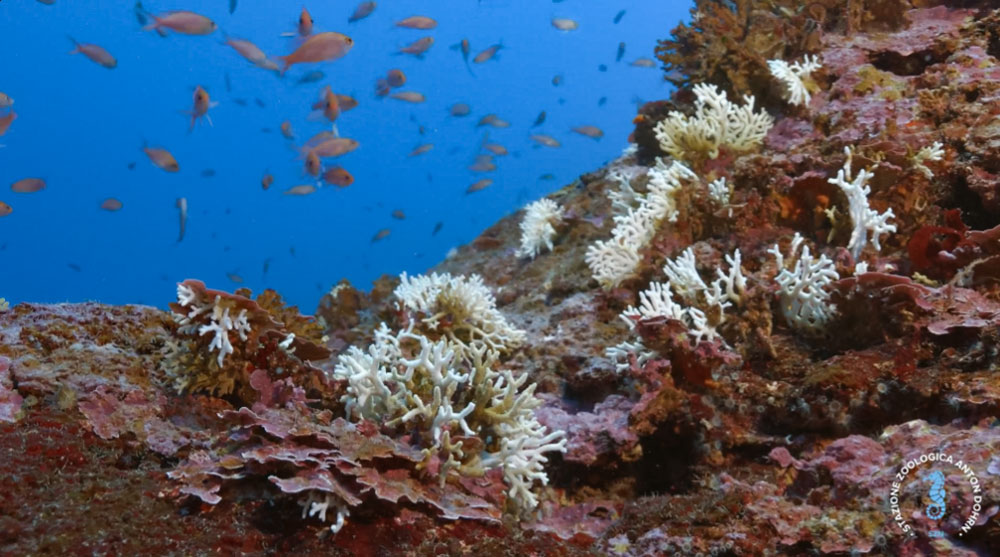
The project, carried out as part of the National Biodiversity Future Center (NBFC) – Spoke 2, aimed to achieve the exceptional scientific sampling of Errina aspera, an extremely rare colonial hydrozoan and the sole representative of the Stylasteridae family in the Mediterranean.
The action took place at a shoal located at the closest point between Sicily and Calabria, known to local fishermen as “Rocca di San Nicola.” Here, at the shallowest point of the Strait, water masses collide with such force that they have fuelled myths and legends for centuries.

Diving in this location means facing the unexpected. Despite meticulous planning, the currents remain an unstable force, capable of shifting direction and intensity in an instant. As the film’s narrator notes: “The sea is rough, and the current is not what was predicted.”
Further complicating matters is the maritime traffic; the Strait is a true “highway of the sea”. To operate safely and avoid collisions with the constant stream of passing ships, the divers were escorted by the Coast Guard and relied on the essential support of the Stazione Zoologica Anton Dohrn staff, Arena Sub, and Carmelo Isgrò (MuMa – Museum of Milazzo).
To overcome the technical challenges posed by such a complex environment, the diving team employed cutting-edge technology. The use of rebreathers (CCRs) was fundamental: these closed-circuit systems recycle exhaled gases, providing much greater autonomy than traditional equipment and enabling optimal management of the gas mixture at the depths reached.
Powerful underwater scooters equipped with integrated navigation systems developed by SUEX were essential for moving against the currents, optimising bottom time, and maintaining orientation. These scooters allowed the divers to reach the sampling point with extreme precision and geo-reference the intervention area.
The team’s expertise and clear division of labour ensured efficiency and safety. Simone Nicolini managed navigation, Dario Santomauro was responsible for dive safety and Marco Panico handled the lighting for the underwater filming.

Under the masterful direction of Roberto Rinaldi, viewers embark on a journey that begins on the beaches of the Strait. For centuries, researchers and naturalists have gathered abyssal organisms here that have been pushed to the surface by upwelling currents, offering a rare glimpse into the creatures of the deep.

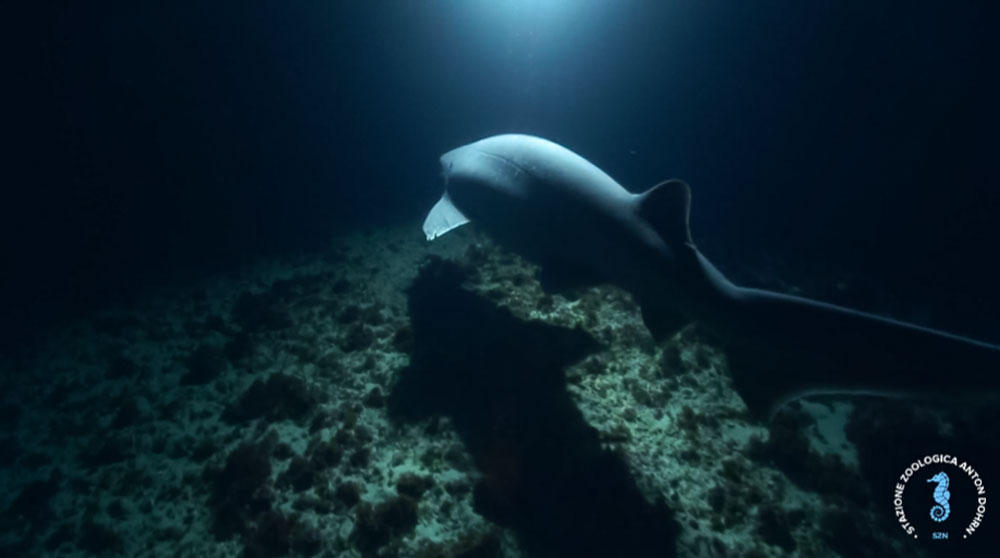
From the shore, the journey dives toward seabeds characterized by enormous biodiversity, fuelled by nutrient-rich waters. The path crosses extraordinary habitats of ecological significance, ranging from Posidonia oceanica meadows to Laminaria ochroleuca thickets and gorgonian forests. The descent is punctuated by thrilling encounters with creatures such as the bluntnose sixgill shark (Hexanchus griseus), a giant of the deep that rises to accessible depths in these waters.
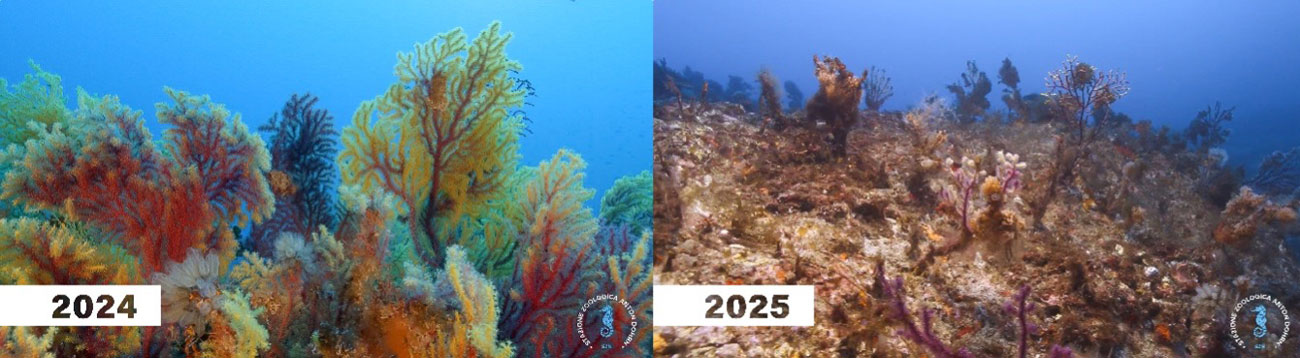
However, the exploration also reveals the impact of climate change: gorgonian forests are suffering from widespread and alarming die-offs. Rising water temperatures caused by climate change are placing increasing thermal stress on marine organisms, making them more vulnerable and threatening biodiversity.
The descent continues until the shoal is reached, where the scenery changes abruptly. A breathtaking spectacle opens before the divers: vast, white expanses of Errina aspera colonies stretch as far as the eye can see, forming a secret garden that has been documented in its full glory for the first time.
With time ticking away relentlessly, the team had to act with extreme speed and precision: collecting the necessary samples for research before immediately beginning the long ascent and facing over three hours of decompression in the open water.
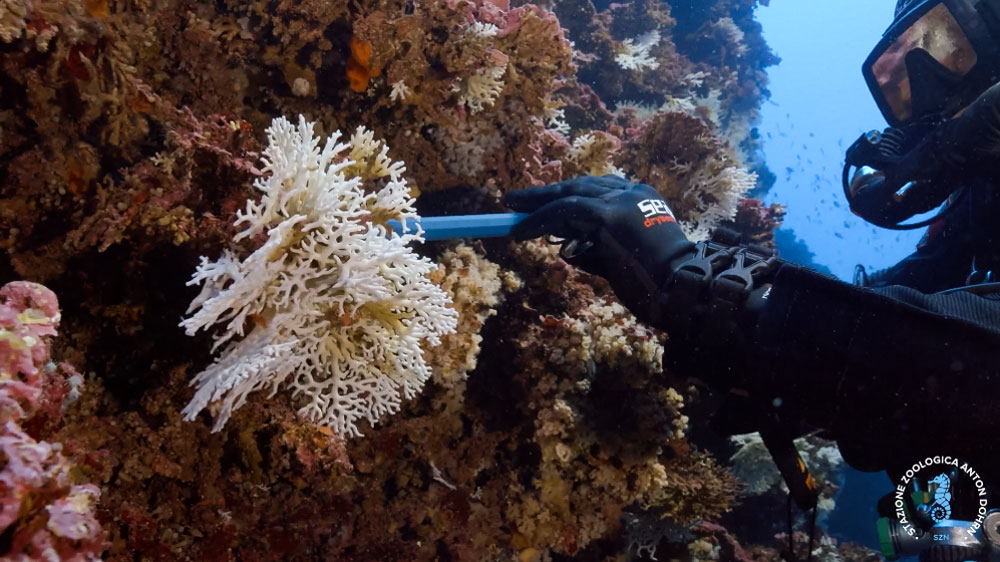
Once collected, the colonies were transported under controlled conditions to Amendolara (CS), home to the experimental tanks of the Mesocosm Laboratory at the CRIMAC (Calabria Marine Centre) headquarters of the Stazione Zoologica Anton Dohrn.
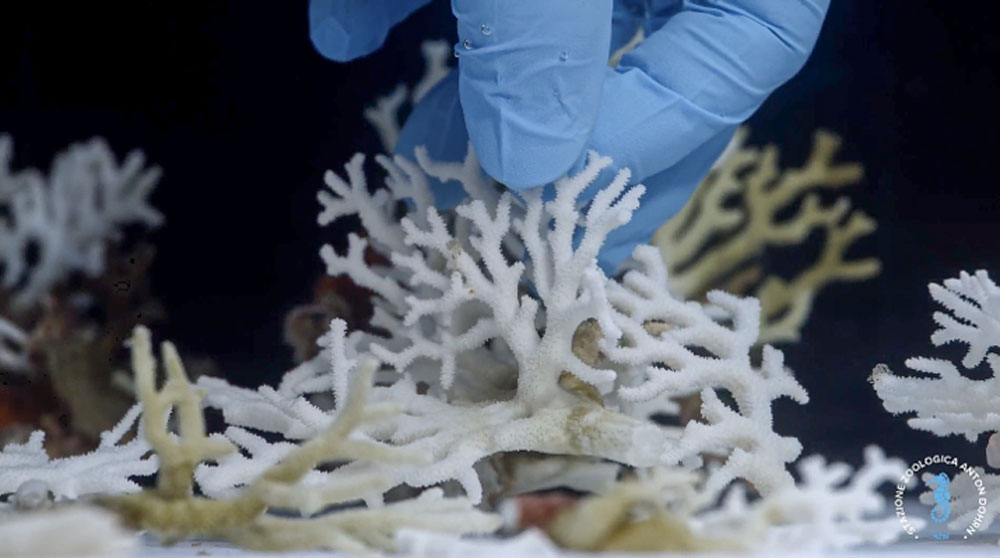
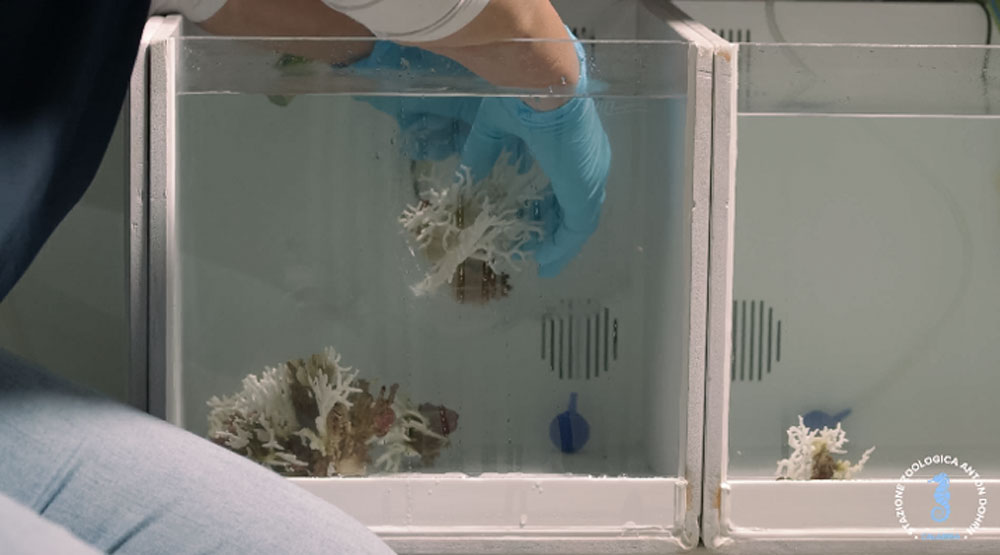
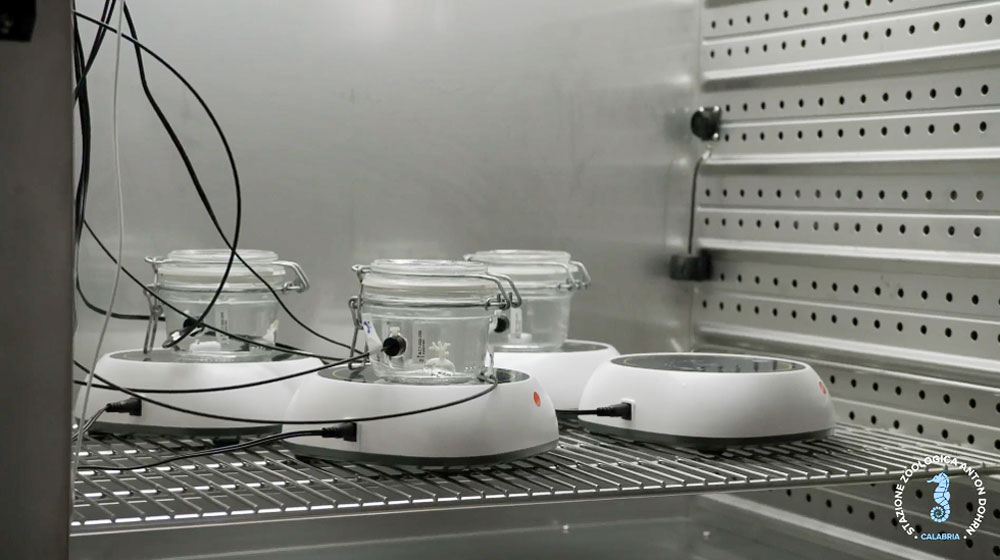
Here, by regulating tank parameters, scientists can simulate various future climate change scenarios. Specifically, they use respirometry tests to measure the metabolic rate of colonies subjected to temperature variations, as this is an indicator of vitality and well-being. Understanding these factors is vital to predicting the effects of warming waters at the great depths of the Strait and identifying the thermal tolerance limits of the species.
This adventure proves that protecting the sea begins, first and foremost, by unveiling its secrets.
It serves as evidence that the synergy between technical expertise, logistical support, and cutting-edge scientific research is the only key to exploring inaccessible environments. Only through cooperation across different fields, backed by modern innovation, can exploration be transformed into knowledge. It is only at that point that we can find the path to truly safeguarding the Mediterranean.
This documentary is a tribute to the secret beauty of the Strait and a collective step toward its preservation.
All photos are by Roberto Rinaldi.
About the author

Dive into the latest stories,
before anyone else.
Subscribe to the
Alert Diver
newsletter.